C-US
Client: buro marcel van der heyden
The project connects two sides of the same problem: audiences need a clear, useful way to explore local culture, and organizations need a practical way to keep their information current. C-US brings those needs together through a public discovery app, an organization management system, and the data services that support them.
Cultural events are often spread across many separate websites and calendars. Finding something to do can mean checking venue pages one by one, comparing dates, and figuring out which events are close enough to attend. C-US makes that discovery feel more connected: browse upcoming events, search by interest or location, and explore the venues behind them.
The regional focus is central to the idea. C-US treats culture as a network of places and experiences, rather than a collection of isolated listings. A concert hall, museum, theatre, or community venue becomes part of a shared cultural landscape. By bringing that information together, the platform makes it easier to find something unexpected and to see what is happening beyond the places people already know.
The project also considers the organizations that supply the information. Event data needs to be collected, organized, corrected, and presented consistently. C-US pairs the audience-facing experience with tools for managing venues and events, so the platform can serve visitors and cultural partners as parts of one system.
The experience
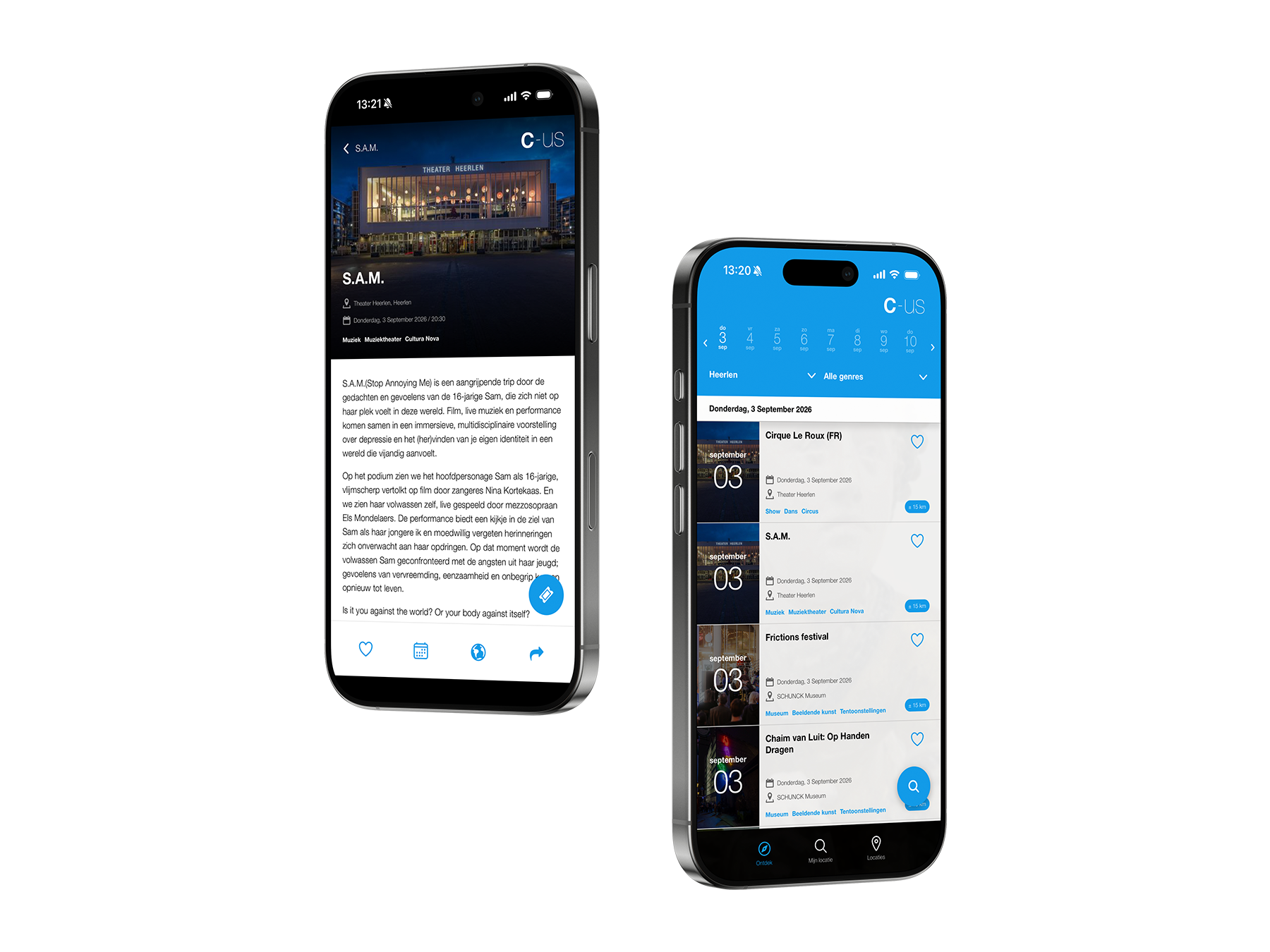
The mobile app is designed around discovery. Visitors can browse events by date, search listings, and narrow results by location, distance, or genre. They can explore venue profiles, save events to a favourites list, and use event details to continue toward practical next steps.
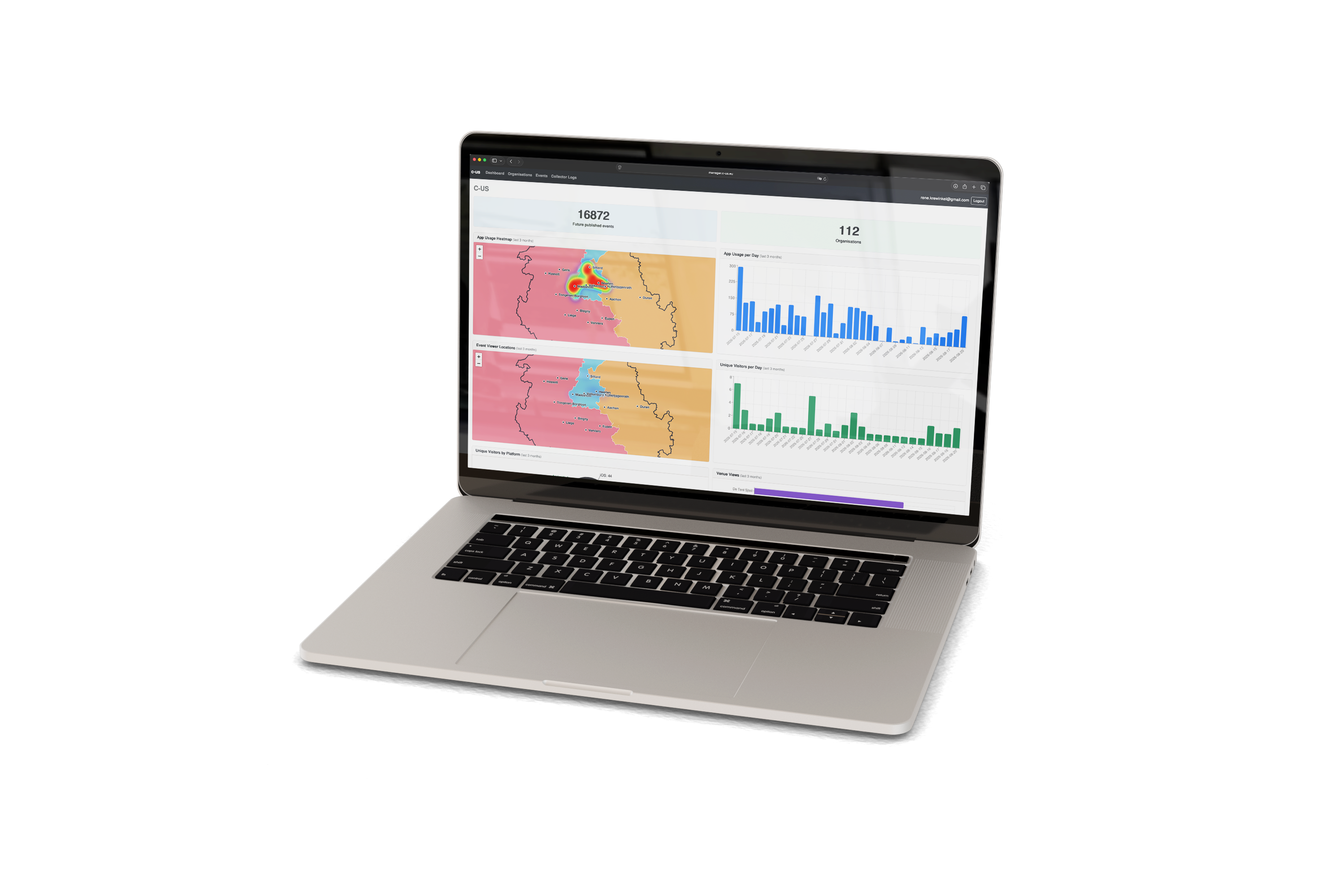
The organization manager supports the work behind those listings. Organizations can maintain their profiles and venue details, while administrators can manage organizations and users. The manager also provides event editing and reporting tools, bringing operational tasks into the same platform as the public service.
The technical approach
- Mobile and web app: React Native and Expo provide a shared application for iOS, Android, and web. The app uses Expo Router for navigation and includes features such as date selection, search, filters, venue browsing, and locally stored favourites.
- Organization manager: A Next.js application provides authenticated tools for managing organizations, venues, users, events, and platform activity.
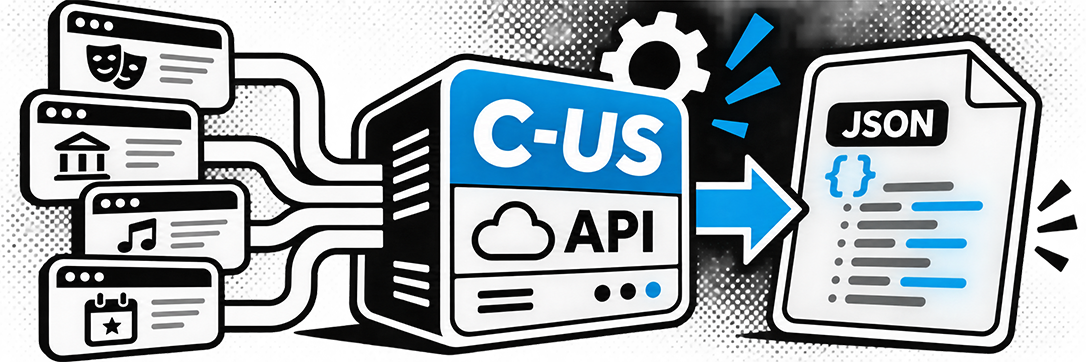
- Data API: A Rust service exposes event and venue data through HTTP endpoints. It uses Actix Web and MongoDB to serve the app and management tools.
- Event collection: Python and Node.js collectors gather listings from participating cultural organizations. Separate collectors accommodate the different structures and formats used by each source.
- Shared data and deployment: MongoDB stores the platform’s event and organization data. Docker Compose connects the services for deployment, while the collector system can run as an independently managed part of the stack.
This architecture lets the public app, management tools, and data collection evolve separately while working from shared information. It also makes it possible to add new event sources without redesigning the audience experience around each organization’s website.
Data discovery and curation
uilding the event catalogue starts with discovery work: identifying cultural organizations across the region, finding the authoritative page or feed for each agenda, and investigating how that source represents its listings. Some sources expose structured JSON, while others require parsing HTML or following event pages to find dates and descriptions. Each collector is adapted to the source, then maps the results into a shared event model with venue details, dates, images, links, and categories. The ingestion pipeline also handles practical differences such as multilingual content, exhibitions that span multiple days, and venues whose opening hours determine which dates should appear. Stable event identifiers make repeated collection safe, while stale future listings can be unpublished when they disappear from a source. This makes data discovery an ongoing process of finding sources, understanding their structure, and maintaining the quality of the catalogue—not just a one-time import.
Project summary
C-US is a regional cultural discovery platform connecting audiences, venues, and event data. It combines a cross-platform app, an organization management system, a Rust API, MongoDB, and automated collectors to make local cultural events easier to find and manage.
| C-US is a cultural events platform that brings events and venues from across the Maastricht and Limburg region into one place. It helps people discover what is happening nearby, while giving cultural organizations a way to manage their venue information and reach a wider audience. | ||||||||||||||