A Walk Among Rolduc’s Artworks
Client: Stichting Leve Rolduc
The project
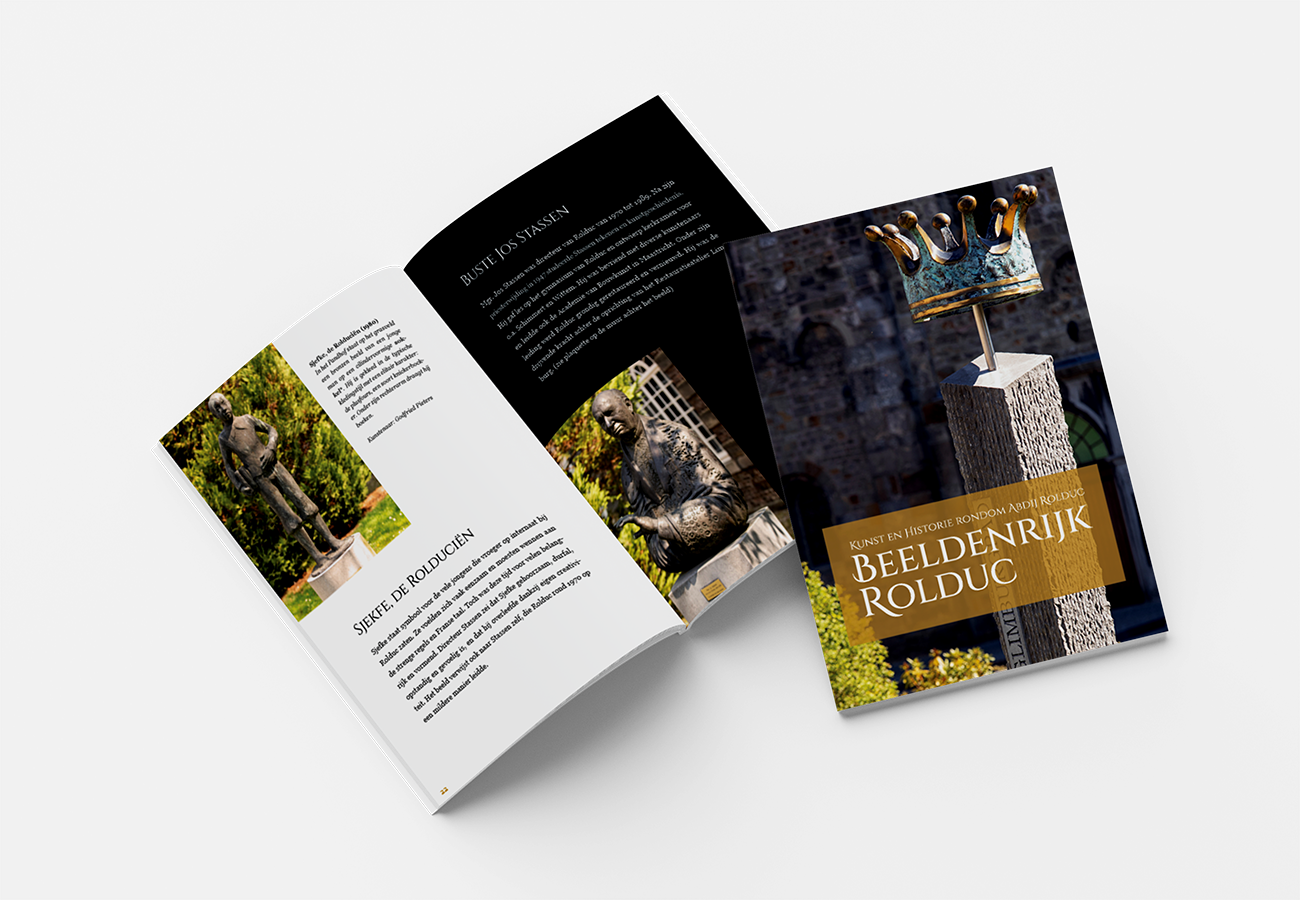
Beeldenrijk Rolduc is a Dutch-language illustrated guide to the artworks, inscriptions and stories of Abbey Rolduc. Designed for Stichting Lève Rolduc, the publication brings together works encountered across the abbey grounds—from historic religious sculpture and memorials to contemporary art in Beeldentuin Rolduc.
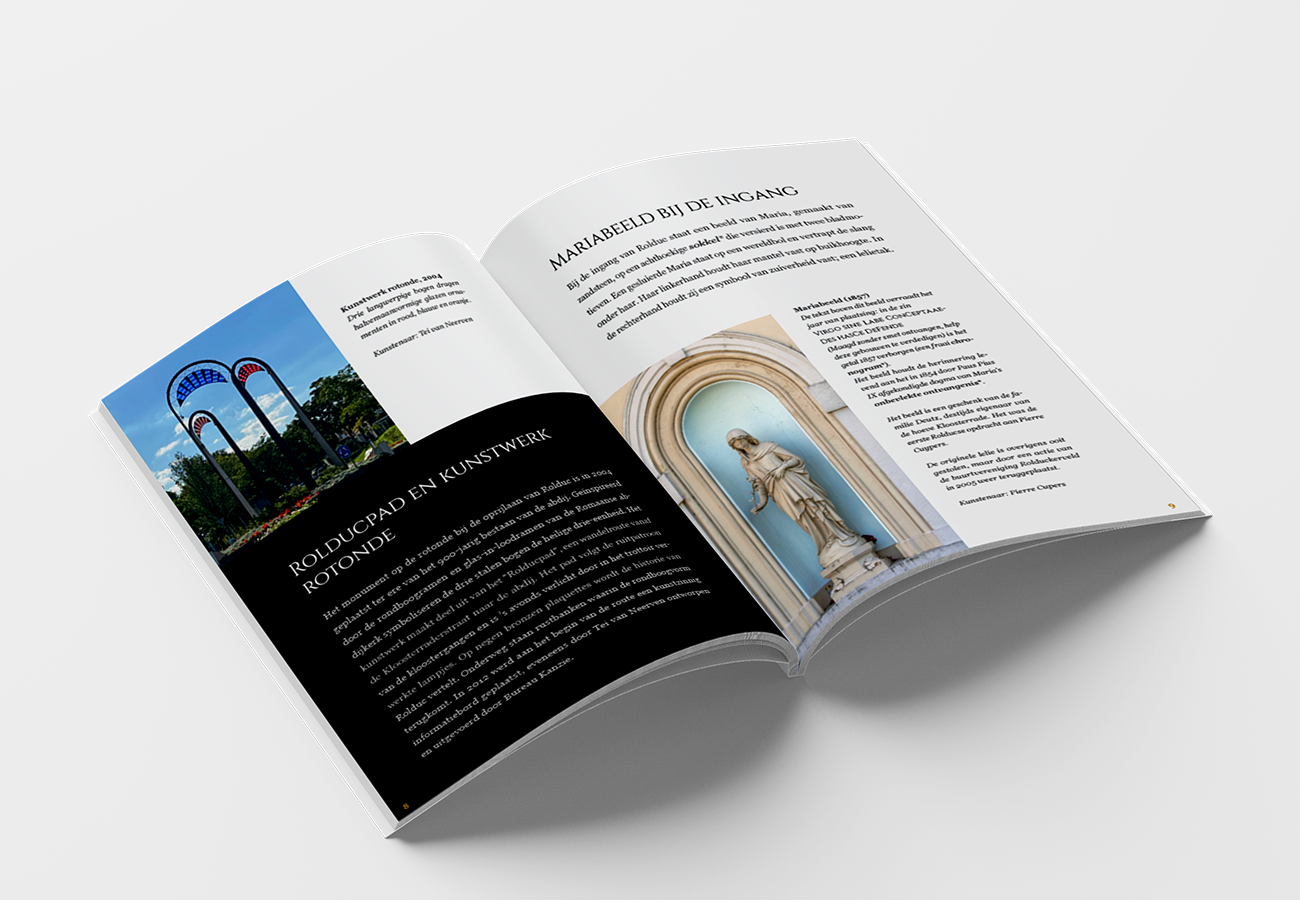
The design makes a varied collection legible as one visitor experience. A route-based sequence leads readers from the approach to the abbey, through its courtyards and cloisters, and into the sculpture garden. Photography shows the works in their architectural setting and draws attention to their material and detail. Concise descriptions, artist credits and historical context give each work its own voice while connecting it to Rolduc’s wider story.
Design challenge
The artworks at Rolduc belong to different periods and contexts. Some are monumental and immediately visible; others are inscriptions or architectural details that reward close looking. The publication needed to give visitors practical orientation while preserving the richness of the site and its history.
I designed the guide as both a visual introduction and a companion for exploring the grounds. The sequence establishes a clear sense of place, then moves between artwork photography, identification and interpretation. Readers can follow the walk or browse individual subjects, with route information and numbered locations relating the printed pages to the site.
Editorial structure
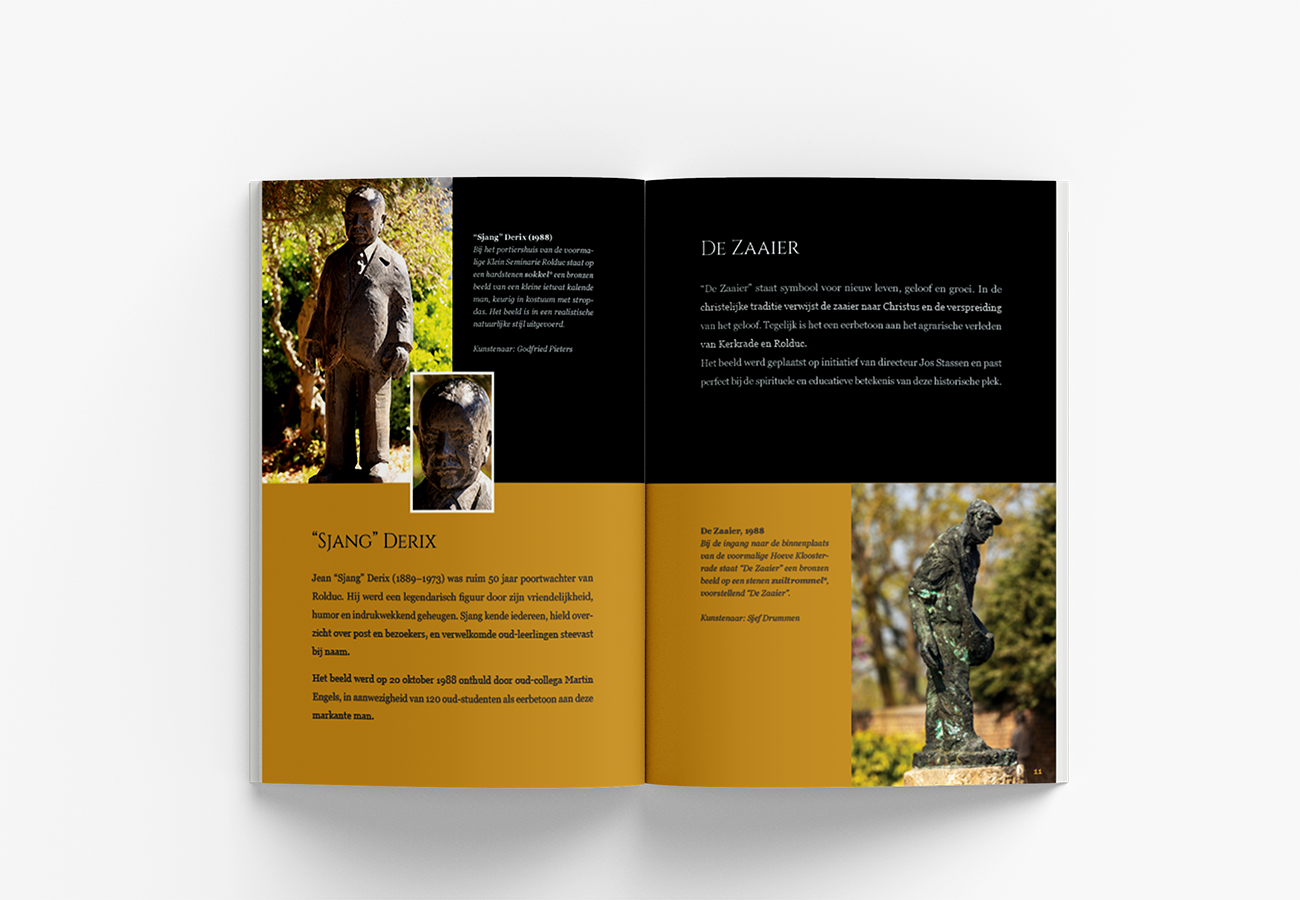
The guide begins with the cultural role of Stichting Lève Rolduc and introduces the collection as part of the abbey’s living heritage. Its main sequence follows the visitor’s route. It features, among others, Tei van Neerven’s roundabout monument, Pierre Cuypers’ Mariabeeld and Ailbertus monument, the memorial to gatekeeper Jean “Sjang” Derix, and Godfried Pieters’ sculpture of Sjefke, the Rolduciën.
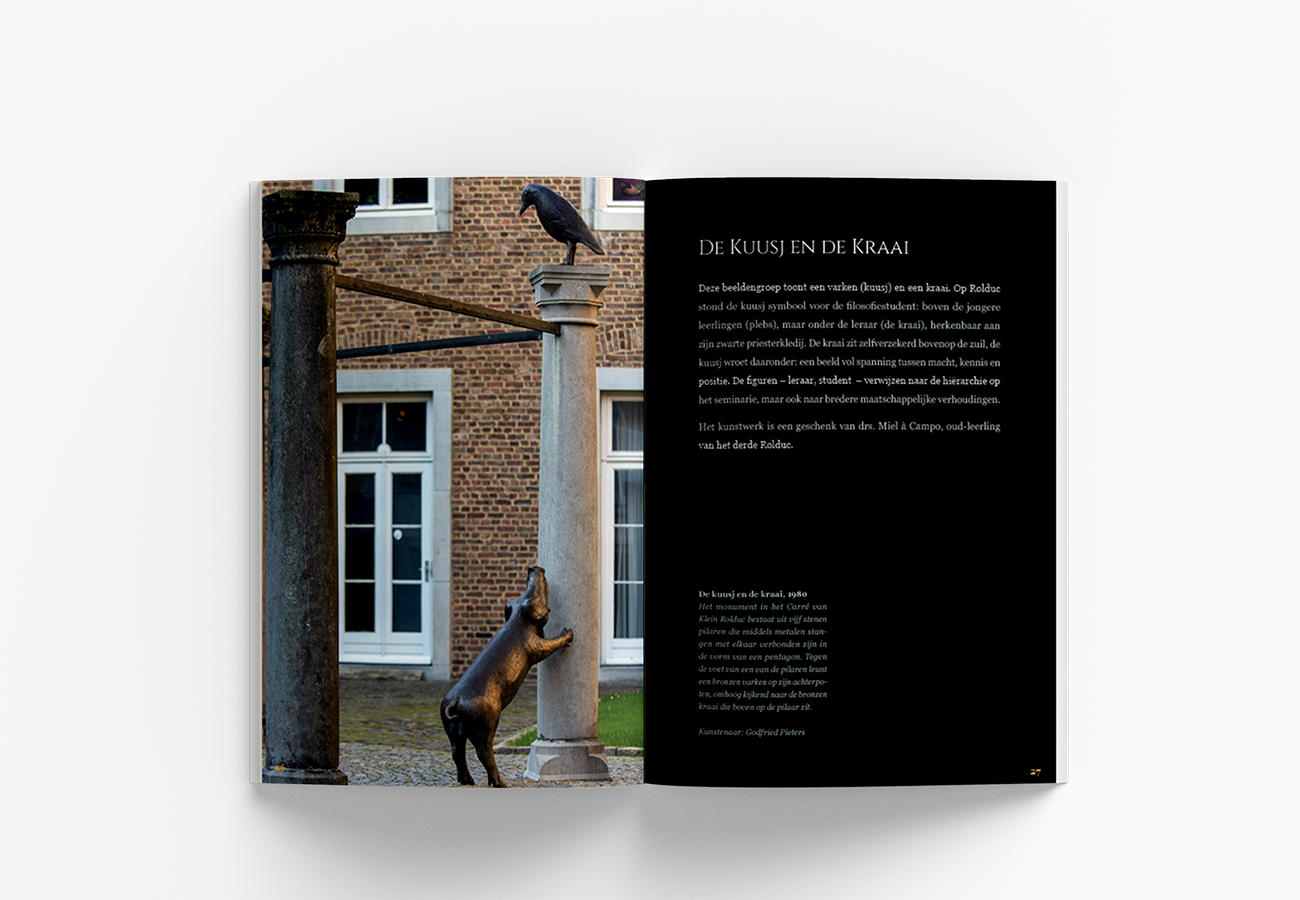
Alongside the sculptures, the publication gives space to details embedded in the architecture: the mosaic made from Maas pebbles, a restored funerary monument in the church tower, and chronograms whose Roman-numeral letters encode dates. An illustrated glossary explains specialist terms, and an artist index provides context on the makers represented around Rolduc.
This structure lets practical information and cultural interpretation work together. Captions help identify a work; the accompanying text explains its origins, symbolism or relationship to the abbey. The walking sequence then carries the reader onward to the next place and story.
Visual and graphic design
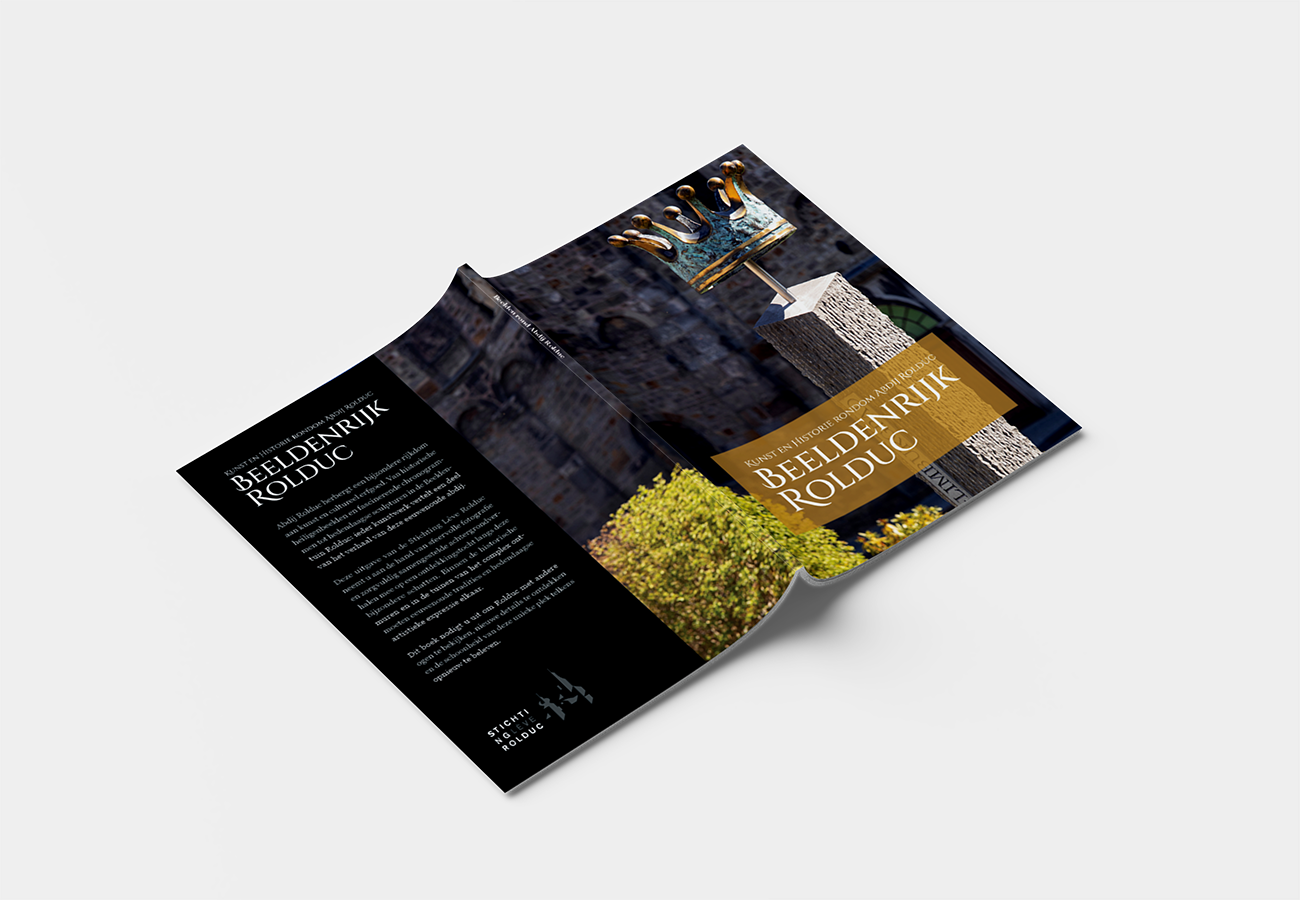
Photography is central to the publication’s visual language. Views of individual works are balanced with images of the abbey and grounds, showing how sculpture, architecture and landscape relate. The layout gives images room to establish atmosphere while using clear typography and consistent information hierarchy to keep names, dates, descriptions and longer stories easy to navigate.
The cover introduces the guide as a cohesive publication, while the interior maintains a steady rhythm between image-led pages and informative text. Map and numbering artwork supports the route, connecting the editorial sequence to physical locations. Together, these elements make the booklet useful on site and engaging as a record of the collection afterwards.
The design brings historic religious works into conversation with contemporary sculpture from Limburg and the Euregio. Rolduc is presented not simply as a backdrop for the art, but as an active part of the collection’s meaning: its buildings, inscriptions, landscape and history shape how each work is encountered.
Deliverables
- Cover and interior design for a 42-page printed guide.
- Editorial layout for photography, artwork descriptions and historical stories.
- Route-based content structure and supporting map / numbering artwork.
- Illustrated glossary, artist index and publication credits.
- Print-ready PDF files and editable InDesign source layouts.
Credits
Published by Stichting Lève Rolduc. Editorial working group: Janine Hanraets-Essers, Regina Krewinkel-Toussaint, Catharina Scholtens, Bert Schiffelers, Franco Wetzelaer and Ruud Schins. Final editing: Regina Krewinkel-Toussaint. Photography: Franco Wetzelaer. Design: René Krewinkel, krewinkel.studio.
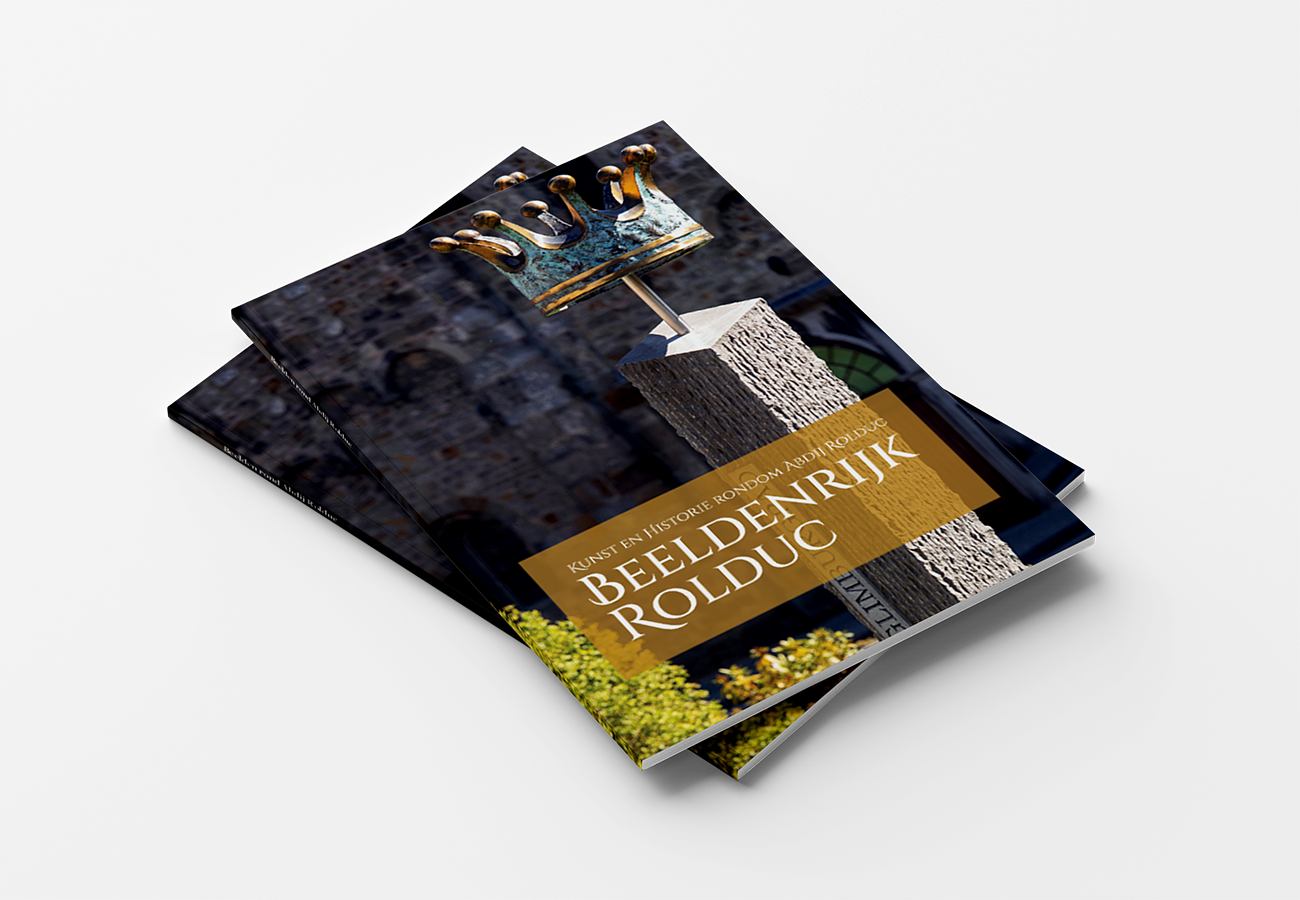
| Rolduc’s artworks tell stories of faith, education, community and change. From Pierre Cuypers’ nineteenth-century Marian statue to contemporary sculptures in the Beeldentuin, they reflect the abbey’s rich history and the people who shaped it. The booklet guides visitors through the grounds, exploring the history and symbolism behind each artwork. I was responsible for the graphic design and desktop publishing, creating an accessible and visually engaging guide. | ||||||||||||